
Two IGET ONE 12000 devices may have the same external design and technical specifications, yet different flavour formulations can produce noticeably different sensory experiences.
One formulation may have a pronounced fruit aroma. Another may create a cooling sensation, while a third may produce a different level of perceived sweetness or throat irritation.
But what actually causes these differences?
The answer lies in flavour chemistry, cooling ingredients, nicotine concentration, individual sensory perception and device operating conditions.
Understanding these factors helps explain why different IGET ONE flavour names may be associated with different tastes, and why the same flavour can sometimes seem different over time.
1. Why Do Different IGET ONE Flavours Taste Different?
Flavour perception is more complicated than simply detecting sweetness or sourness.
When an aerosol enters the mouth and nose, several sensory systems contribute to the overall experience.
Taste receptors detect basic taste sensations, while the olfactory system detects aromatic compounds. A separate sensory system, known as the trigeminal system, responds to sensations such as cooling and irritation.
Different flavouring formulations may contain different combinations and concentrations of aromatic substances.
For example, a formulation intended to resemble strawberry may use a different combination of flavouring compounds from one intended to resemble grape or pineapple.
These chemical differences can influence perceived aroma, sweetness and other sensory characteristics.
However, a flavour name does not disclose the full ingredient composition or establish the exact experience a person will have.
2. Understanding Common IGET ONE 12000 Flavour Names
Several flavour names associated with the IGET ONE 12000 range suggest different aromatic profiles.
The following table explains the flavour concepts represented by these names.
| Flavour Name | Intended Flavour Profile | Possible Sensory Characteristics |
|---|---|---|
| Mixed Berry | Combination of berry aromas | Berry-like aroma and perceived sweetness |
| Kiwi Pineapple | Kiwi and pineapple | Tropical fruit aroma and tart-fruit associations |
| Grape Ice | Grape with cooling notes | Grape-like aroma and potential cooling sensation |
| Strawberry Watermelon | Strawberry and watermelon | Mixed-fruit aroma and perceived sweetness |
| Chupa Chups Grape | Grape confectionery profile | Candy-associated grape aroma |
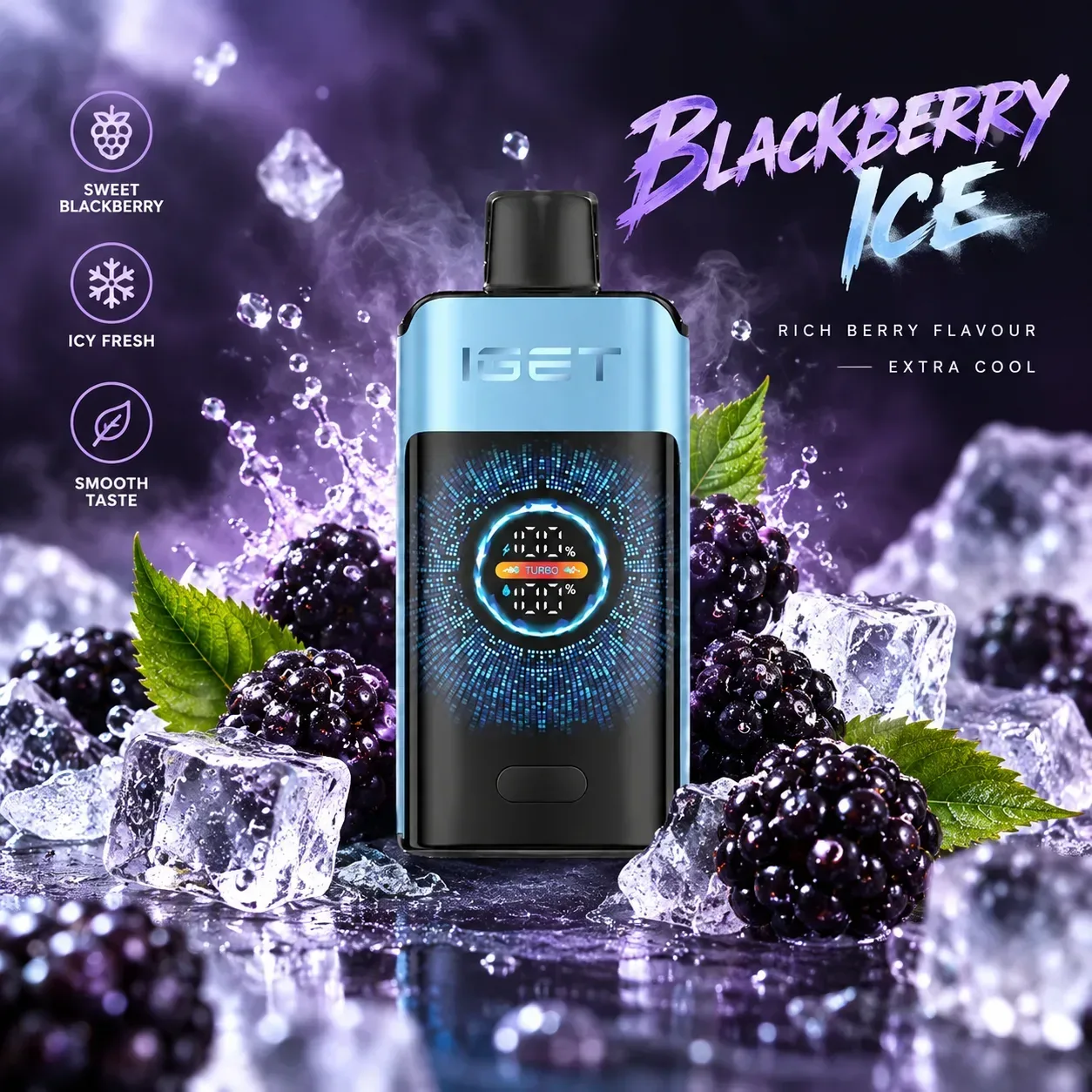
| Blackberry Ice | Blackberry with cooling notes | Berry-like aroma and potential cooling sensation |
These descriptions are based on the flavour names. They are not independent sensory-test findings, and they do not establish the actual chemical composition of any specific product.
3. Why Do Some IGET ONE Flavours Feel Colder?
One of the most noticeable differences between flavour formulations can be the presence of cooling ingredients.
Names containing terms such as “Ice” often suggest a cooling sensation.
In vaping liquids generally, cooling effects may be produced by menthol or other compounds that interact with temperature-sensitive receptors in the mouth and throat.
These receptors can create a sensation of cold even when the aerosol itself is not significantly colder.
This distinction is important because a cooling sensation is a sensory response, not necessarily a measurement of aerosol temperature.
Cooling ingredients can also affect how other sensations, including irritation, are perceived.
A product that feels cooler should not be assumed to produce less harmful aerosol.
4. Can Different Flavours Affect Throat Sensation?
Yes. Different formulations may produce different levels or types of throat sensation.
However, flavouring ingredients are only one part of the explanation.
Nicotine concentration
Nicotine can contribute to irritation in the mouth and throat.
Differences in nicotine concentration and formulation may change how an aerosol feels.
Flavouring chemicals
Some flavouring compounds may contribute to irritation or other sensory effects.
The type and concentration of these compounds can matter more than the flavour name printed on the packaging.
Cooling agents
Menthol and other cooling agents may produce sensations that interact with or temporarily mask irritation.
Feeling less irritation does not demonstrate reduced exposure or reduced health risk.
Aerosol composition
The proportions of propylene glycol, glycerol and other ingredients may influence aerosol characteristics and sensory perception.
Device operating conditions
Heating-element temperature, power delivery and liquid supply can affect aerosol generation.
Therefore, two formulations may feel different even when used in devices with similar published specifications.
5. Why Can the Same IGET ONE Flavour Taste Different Over Time?
A change in perceived taste does not always mean the flavour formulation has changed.
Several factors can explain why the same product may seem different after repeated use.
Sensory adaptation
Repeated exposure to a particular aroma can temporarily reduce its perceived intensity.
This process is often called olfactory adaptation.
A familiar aroma may seem less noticeable after repeated exposure, even if the concentration of the aromatic compounds has not changed.
Changes in heating conditions
Electronic heating elements operate under conditions that can change as a device ages or develops faults.
Variations in electrical output, liquid delivery or heating-element condition may alter the aerosol being generated.
A change in taste alone is not enough to diagnose a specific technical problem.
Liquid delivery problems
If a heating element receives insufficient liquid, abnormal heating conditions may occur.
An unusual burnt taste or smell can be a warning sign of a malfunction.
A sealed device should not be opened or modified in an attempt to repair such problems.
Storage and environmental exposure
Heat, sunlight and storage conditions may affect chemical stability and device components.
However, a perceived flavour change cannot be attributed to storage conditions without supporting evidence.
Individual sensory differences
A person's sense of smell and taste may change temporarily because of nasal congestion, illness, sensory adaptation or other factors.
Consequently, two people may describe the same formulation differently.
6. Does Regular or Turbo Mode Change the Taste of IGET ONE 12000?
Some published IGET ONE 12000 product specifications describe Regular and Turbo operating modes.
Different power settings can change heating conditions and aerosol production.
In principle, this may influence the amount of aerosol generated and the concentration or relative proportions of substances carried in it.
However, it would be inaccurate to claim that a particular mode always produces a sweeter, stronger or smoother taste without controlled testing of that device and formulation.
Operating modes should therefore be understood as technical configurations rather than guarantees of a particular sensory outcome.
7. Does a Sweeter Flavour Contain More Sugar?
Not necessarily.
A sweet aroma can influence perceived sweetness even when a formulation does not contain conventional sugar.
Flavouring compounds can create associations with fruit, confectionery or sweet foods through smell.
For example, a name such as Mixed Berry describes a flavour concept. It does not establish that real berries, fruit juice or sugar are present.
Accurate ingredient information is needed to determine what a specific formulation actually contains.
8. Are Certain IGET ONE Flavours Safer Than Others?
Flavour names do not provide a reliable basis for ranking inhalation safety.
A formulation described as fruity, sweet, minty or cooling may contain different chemical substances, but those descriptions do not reveal the full toxicological profile.
Ingredients that are considered safe to consume in food are not necessarily safe when heated and inhaled.
Assessing potential harm requires information about the ingredients, their concentrations, heating conditions and the substances present in the resulting aerosol.
A pleasant taste, reduced irritation or strong cooling sensation should never be interpreted as proof of safety.
9. Australian Regulations on Vaping Flavours
Australia regulates vaping products under a therapeutic supply framework.
The Therapeutic Goods Administration restricts permitted therapeutic vaping substance flavours to mint, menthol and tobacco, alongside unflavoured formulations.
Fruit and confectionery flavour combinations are not permitted for lawful therapeutic vape supply under the applicable standards.
The supply and advertising of vaping goods are also subject to strict federal and state or territory requirements.
The flavour names discussed in this article are included solely to explain sensory terminology and product identification. Their inclusion does not imply that these formulations are approved or lawfully available for general retail supply in Australia.
Frequently Asked Questions
Do different IGET ONE 12000 flavours actually taste different?
Different formulations can produce different aromas, perceived sweetness, cooling sensations and irritation. The extent of these differences depends on their actual ingredients and the individual experiencing them.
Why does an Ice flavour feel colder?
Cooling agents may activate receptors associated with cold sensations. The feeling does not necessarily mean the aerosol is physically colder.
Can different flavours cause different throat sensations?
Yes. Flavouring ingredients, nicotine concentration, cooling agents and aerosol conditions can all influence throat sensation.
Why does my IGET ONE flavour seem weaker after repeated use?
Sensory adaptation may reduce the perceived intensity of familiar aromas. Device condition and individual sensory factors may also contribute.
Can Regular and Turbo modes affect flavour perception?
Changes in power and heating conditions can influence aerosol production and potentially sensory perception. The specific effects require controlled testing.
Does a sweeter flavour mean a higher sugar content?
No. Perceived sweetness can be influenced by aroma and does not establish the presence of sugar.
Is a cooling flavour safer than a non-cooling flavour?
No. Cooling sensations do not establish lower toxicological risk.
Conclusion
Different IGET ONE 12000 flavour formulations may affect perceived taste, aroma, sweetness, cooling sensation and throat irritation.
These differences arise from a combination of flavour chemistry, nicotine formulation, cooling agents, device operating conditions and individual sensory perception.
The same flavour may also seem different over time because of sensory adaptation or changes in device condition.
Understanding these factors provides a more accurate explanation of flavour differences than relying on product names or subjective descriptions alone.
For Australian readers, flavour discussions should also be considered in the context of the country's therapeutic vaping regulations and restrictions on permitted formulations.
Disclaimer: This article is intended for general educational purposes. It does not recommend vaping, endorse particular flavours or establish the safety of any vaping product.