
Why buy from IGET Store 01
- Prices in AUD, no currency surprises. Every listing shows the Australian dollar price you pay at checkout.
- A$18 flat-rate shipping Australia-wide, free over A$199. One rate to every state and territory, metro or regional.
- Dispatch within 1 business day, tracking emailed. Orders paid before the daily cut-off are picked, packed and handed to the courier the same business day, with a tracking ID sent to your inbox.
- Proof of shipping, not just promises. Every released order carries a carrier label and a tracking link you can check yourself.
- 30-day free returns. If a device arrives faulty or not as described, you have 30 days to sort it out with us.
- 21+ only. Nicotine products are sold strictly to adults; age confirmation is required at checkout.
The short version: the disposable vape market in Australia has stopped competing on puff numbers alone. The devices that will define 2027 are the ones that changed how the vapour is made and how much the device tells you about itself — lower-resistance mesh coils, user-selectable draw modes, real on-screen battery and e-liquid readouts, and flavours that lean hard into nostalgia and precisely calibrated ice. The four ranges we stock each demonstrate one of those shifts, and none of them needs a bigger shell than a 2025 model to do it.
Below are the five trends worth tracking as you plan your 2027 rotation, with the actual numbers from the devices on our shelves rather than marketing claims.
Trend 1: Puff counts have plateaued at 9,000–12,000
Three years ago the headline number was 600. Then 3,500, then 9,000. In 2026 the ceiling has effectively settled between 9,000 and 12,000 puffs, and the ranges we carry sit exactly on that band: ALIBARBAR INGOT 9000 at 9,000, IGET Bar Pro 10000 at 10,000, and both the IGET One 12000 and ALIBARBAR TEQ 12000 at 12,000.
Why the plateau? Physics and practicality. A disposable only holds so much e-liquid before the shell becomes something you would not pocket, and once a device already lasts most casual users two to four weeks, a larger number stops selling. The interesting consequence is on price per puff, which is now the honest way to compare a 9,000 against a 12,000:
That table is the trend in one screen: paying more for a higher puff count is not automatically worse value, and paying less is not automatically better. On list prices today, the TEQ 12000 and the Bar Pro 10000 land within a cent of each other per hundred puffs — one gets there with a bigger tank, the other with a lower sticker price.
Trend 2: The dual-mode draw is becoming a buying criterion
The IGET One 12000 ships with two draw modes rather than one fixed airflow. Regular mode is rated to the full 12,000 puffs; Turbo mode trades longevity for density and lands nearer 9,000 puffs. That trade is the whole point — it puts the choice of "make it last" versus "make it hit" in the user's hand instead of in the factory's airflow design.
For 2027, expect this to spread. Once one device in a price bracket offers a switch, a fixed-draw competitor at the same price starts looking like it is missing a feature. Practically, it also changes how you read a puff rating: a "12,000 puff" claim on a dual-mode device describes the gentler setting, not every session. If you want the full breakdown of what each mode costs you in runtime, our IGET One runtime guide works through it day by day.
Trend 3: Devices now report their own status
The single biggest quality-of-life change of the last 18 months is telemetry. The ALIBARBAR INGOT 9000 shows a real-time readout of battery level and remaining capacity on the body of the device. The One goes further with a colour screen carrying a battery percentage, an e-liquid percentage and a four-digit puff counter.
This matters more than it sounds. The classic disposable complaint — "it died with no warning" — is mostly an information problem, not a hardware one. A device that shows you 15% liquid left is a device you can plan around. The catch is that readouts vary in what they actually measure, and a decorative ring of light is not a gauge; we covered exactly which icons mean what in the IGET One LED display guide.
Trend 4: Mesh coils keep getting lower in resistance
The stock mesh coil in this category used to be a 1.2 Ω unit. That is still what the Bar Pro 10000 runs, and it is a sensible match for a 2,000 mAh cell: moderate drain, steady flavour, no drama. The shift is that flagship devices are now shipping dual mesh at much lower resistance — the One 12000 uses a 0.6 Ω dual mesh setup fed by a 2,700 mAh battery.
Lower resistance means more heat per draw, which means denser vapour and faster flavour release, at the cost of drawing the cell down harder. That is why the trend arrives hand in hand with bigger batteries and with dual-mode switches: the hardware has to pay for the extra intensity somewhere. When you compare spec sheets in 2027, read resistance and battery together, not separately.
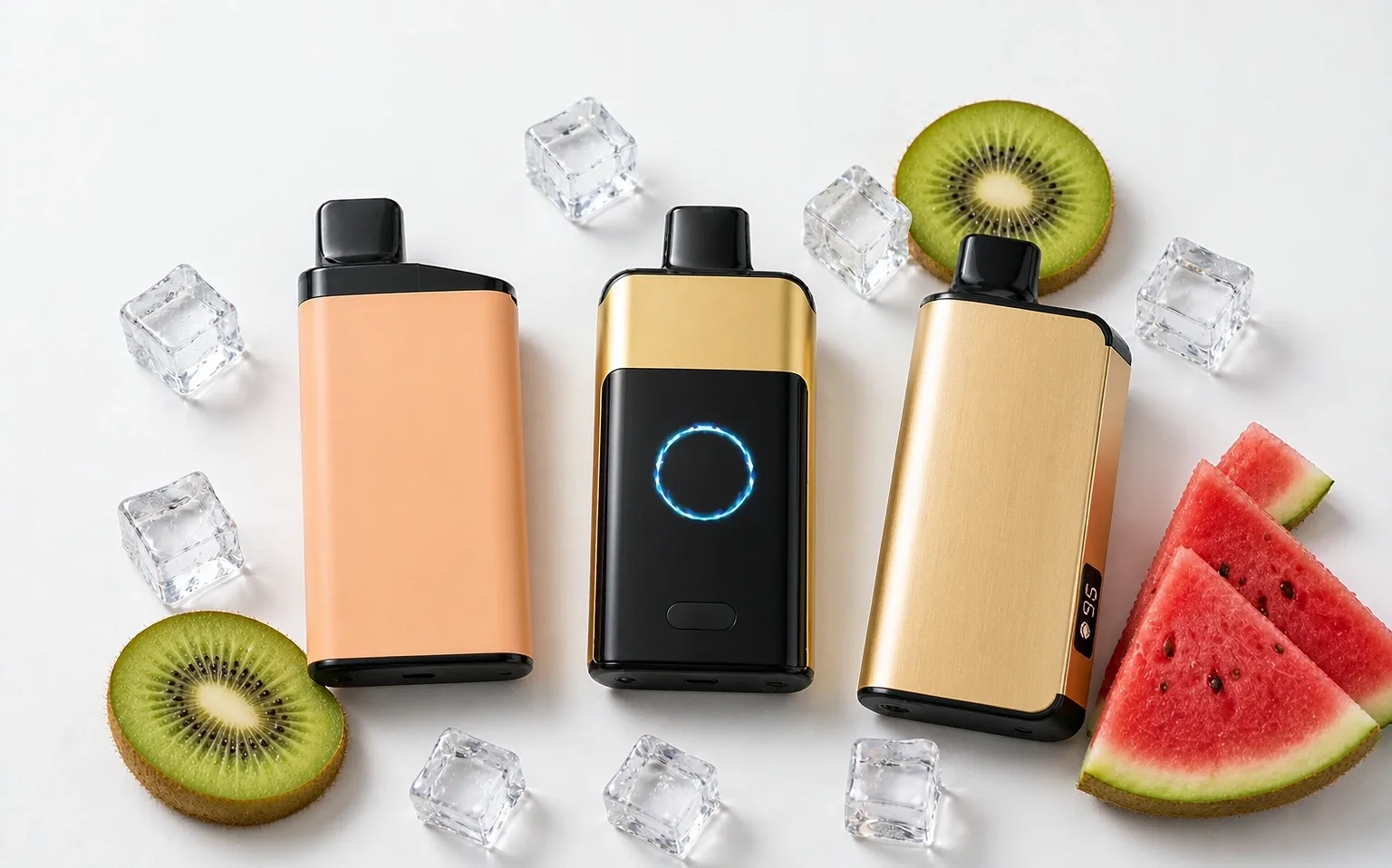
Three approaches to the same 9,000–12,000 puff band: fixed draw, dual-mode and display-led.
Trend 5: Nostalgic flavours, and ice as a dial
Flavour development has split into two visible directions, and both are about memory rather than novelty.
The first is confectionery and soft-drink nostalgia. Chupa Chups grape and strawberry, Hubba Bubba grape, Skittles and Banana Buzz are all names lifted from things people remember buying as kids, and they now sit alongside the fruit-led staples. The second is ice calibration: watermelon ice, blackberry ice, peach ice and similar builds are engineered so the cooling sits at a specific intensity rather than being an all-or-nothing blast. The result is that "ice" has become a dial you can choose, not a category.
In our own listings the effect is easy to see. The Bar Pro range currently carries twelve flavours spanning confectionery, berry, stone fruit and menthol; the full ranking is in our Bar Pro flavour guide, while the INGOT line-up is grouped by family in the INGOT 9000 flavour guide. If you are choosing between the two brands on taste alone, the One vs INGOT comparison is the shorter read.
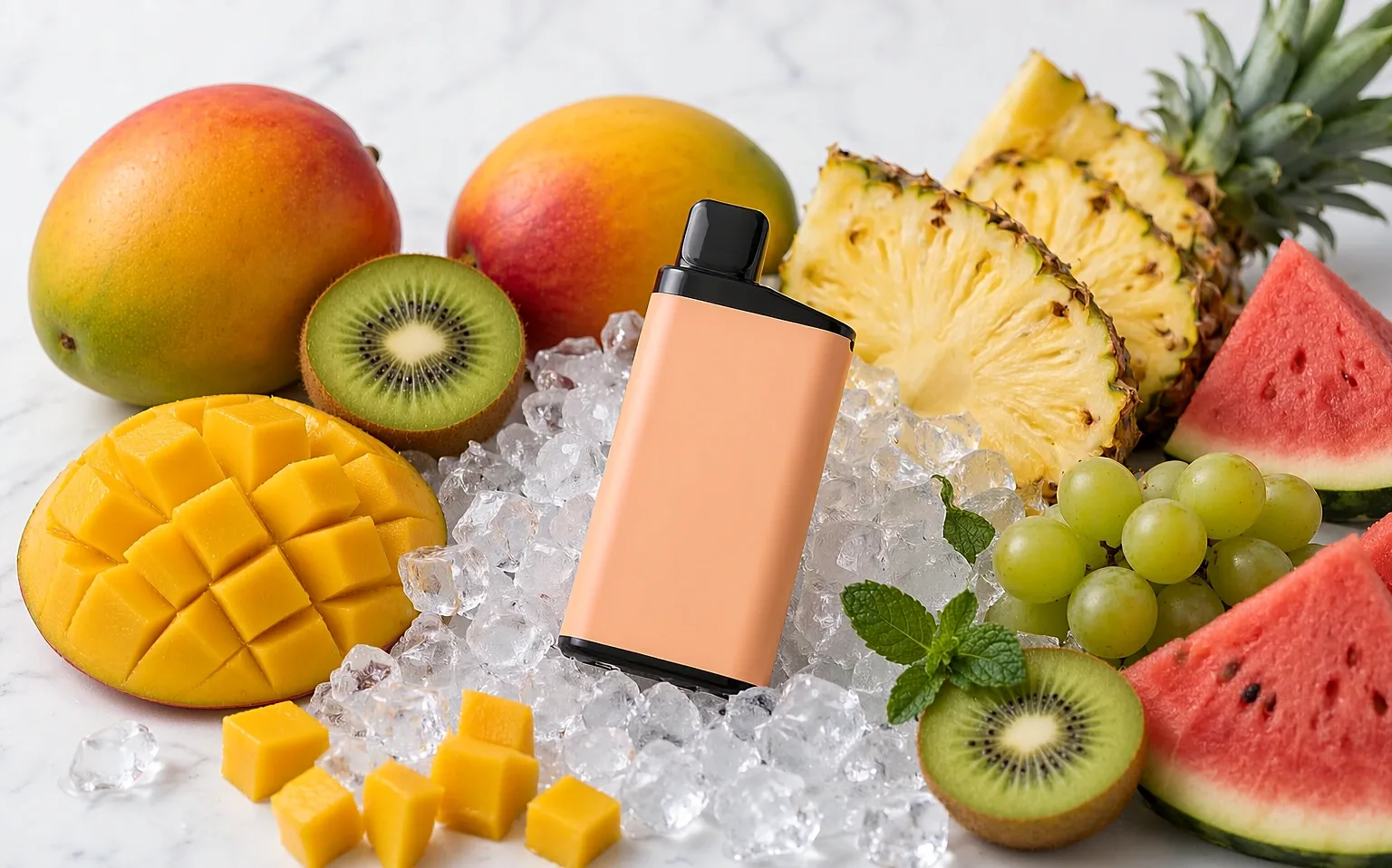
The 2027 flavour map: tropical fruit, confectionery nostalgia and a separately adjustable ice level.
Where the four ranges actually differ
Specifications as published on each product page at the time of writing. Where a figure is not published by the manufacturer, we leave it blank rather than estimate it.
What this means if you are buying in 2027
Three practical rules fall out of the trends above.
Buy the draw you want, not the number. If you take long, slow draws all day, a 12,000-puff device on its regular setting is the sensible pick. If you want body and warmth in each pull and do not mind refilling your pocket sooner, a dual-mode unit in Turbo is closer to the mark.
Treat a display as a feature worth paying for if you hate surprises. Knowing you have a fifth of a tank left changes how you use a device. If screens and iconography are not your thing, the Bar Pro's simpler body is not a downgrade — it is just less to look at.
Do the per-puff maths before assuming bulk is cheaper. The INGOT 9000 is also sold as a 20-piece carton at A$989.00, which works out to A$49.45 per device — a real but modest saving over the A$49.90 single price. It is a convenience buy for households that already know their flavour, not a discount event, and we would rather say so plainly.
A note on the rules
None of the above changes the legal picture. Nicotine vaping products in Australia sit inside a prescription-and-pharmacy framework, with state and territory rules layered on top, and the product standards that took effect in 2025 still govern what can legally be supplied. We sell to adults 18 and over, we verify age at checkout, and we describe our products accurately rather than promising outcomes. If you want the detail, our guide to disposable vape rules in Australia sets out the framework and the penalties.
Frequently asked questions
Are puff counts on disposable vapes accurate?
They are manufacturer ratings measured under controlled draw conditions, so treat them as a comparison tool rather than a promise. Long, hard draws and higher power modes both reduce the number of puffs you will actually get.
Is a 12,000 puff device better than a 9,000 puff one?
Not automatically. At current list prices the cost per hundred puffs across our four ranges sits between roughly A$0.42 and A$0.55, so the differences are smaller than the headline numbers suggest. Draw style, flavour accuracy and whether the device has a display usually matter more day to day.
Do these devices need charging?
It depends on the model. The INGOT 9000 uses a built-in battery and is not designed to be recharged. Where a device is rechargeable, use only the cable and charger specified on its product page, and never leave it charging unattended.
How fast is delivery, and what does it cost?
Shipping is a flat A$18 Australia-wide and free on orders over A$199. Orders paid before the daily cut-off are dispatched the same business day with tracking emailed to you; metro deliveries typically land within a few business days. Full details are on our shipping page, and if you are ordering around public holidays check the holiday cut-off guide.
What if the device arrives faulty?
Contact us within 30 days with your order number and a description of the fault. We will assess it under our returns policy; see the FAQ for the step-by-step process and the dispatch evidence we keep for every order.
Ready to pick a direction for 2027?
Browse the IGET Bar Pro range for the simplest, lowest-cost option, the IGET One range if you want dual-mode draw and a screen, or the ALIBARBAR TEQ range for the strongest cost-per-puff maths. Adults 21+ only.
This product contains nicotine. Nicotine is an addictive chemical. Sold to adults 18 and over only. Specifications are as published by the manufacturer and may change without notice.